Blast of Rice
Magnaporthe oryzae

🔍 อาการที่พบ
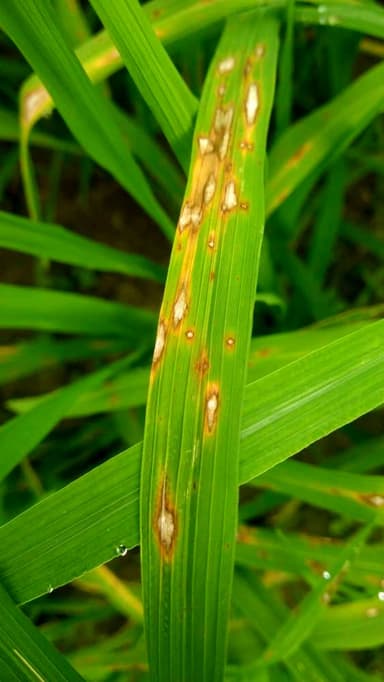
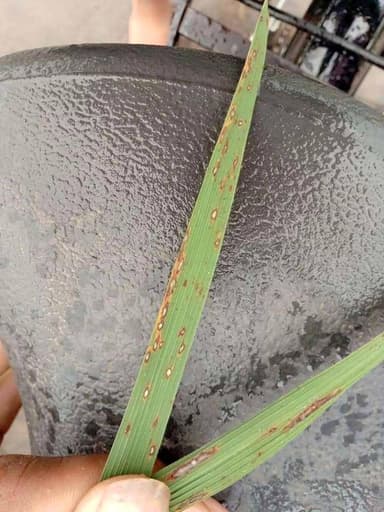
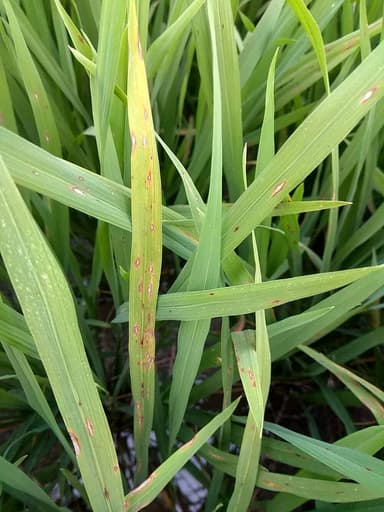
- ✓Oval to round white spots with dark margins on leaves.
- ✓Nodes can also show symptoms.
- ✓Death of seedling or young plants.
📋 สาเหตุของโรค
Symptoms of rice blast are caused by the fungus Magnaporthe grisea, which is one of the most destructive diseases of rice. It can also infect other agriculturally important cereals such as wheat, rye, barley, and pearl millet. The fungus can survive on the straw after harvest and thus be carried over to the next season. Plants usually become less susceptible to the pathogen as they mature. The disease is favored by cool temperatures, frequent rainfalls, and low soil moisture. A prolonged period of leaf moisture is also required for infection. In upland rice, sites prone to dew formation (large day to night temperature differences) are at risk. Finally, plants sown in soils with high nitrogen or low silicon levels are more likely to develop the disease.
💊 วิธีรักษา
Always consider an integrated approach with preventive measures together with biological treatments if available. Seed treatment with thiram is effective against the disease. Fungicides containing azoxystrobin, or active ingredients of the family of triazoles or strobilurins can also be sprayed at nursery, tillering and panicle emergence stages to control rice blast. One or two fungicide applications at heading can be effective in controlling the disease.
To this day, no effective biological control of the disease is commercially available. Experiments are ongoing to test the viability of products based on Streptomyces or Pseudomonas bacteria on the fungus and the incidence/spread of the disease.
🛡️ วิธีป้องกัน
- •Use healthy or certified seed material.
- •Plant resistant varieties available in the area.
- •Sow seeds early in the season, after the onset of the rainy season.
- •Avoid excessive nitrogen fertilisation and split the applications into two or more treatments.
- •Avoid drought stress to the plants with regular irrigation.
- •Keep a proper flood level for the rice to grow properly.
- •Maintain continuous flooding and avoid drainage of the rice field.
- •Maintain control of weeds and alternative hosts.
- •Apply silicon fertilisers if the soil is known to be silicon deficient.
- •Cheap sources of silicon include straws of rice varieties with the high silicon content.
- •Monitor your field regularly for symptoms.
- •Destroy all infected plant residues to prevent the carry-over of the fungus in the field.
- •Plan a crop rotation as a simple and effective way to reduce populations.
🖼️ ภาพอ้างอิงโรค